Get past your first three ideas.
Your first concepts are the ones everyone has. Gletch trains you to generate more options, further from the obvious, and to know which one is actually worth building.
The hard part isn't the craft. It's the concept.
Everything looks like your references
You open the same three sites before every project, and the work comes out shaped like what you just looked at. New inputs produce new outputs.
You stop at the first workable idea
Deadlines push you to commit to concept one. Practising fluency makes generating ten options fast enough to actually do.
The brief is the wrong question
The best design work reframes the problem instead of solving the one handed to you. That reframing move can be trained directly.
Execution has become the easy part
Tools got fast. Taste and judgement about what to make didn't, and that's now what separates good work from generic work.
Train the thinking, not the tool.
- Run divergent-thinking exercises before a concepting session
- Practise reframing so you question the brief instead of just filling it
- Pull inputs from outside design when everything starts looking the same
- Track real design hours per project with focus sessions
- Keep a running bank of concepts you can return to
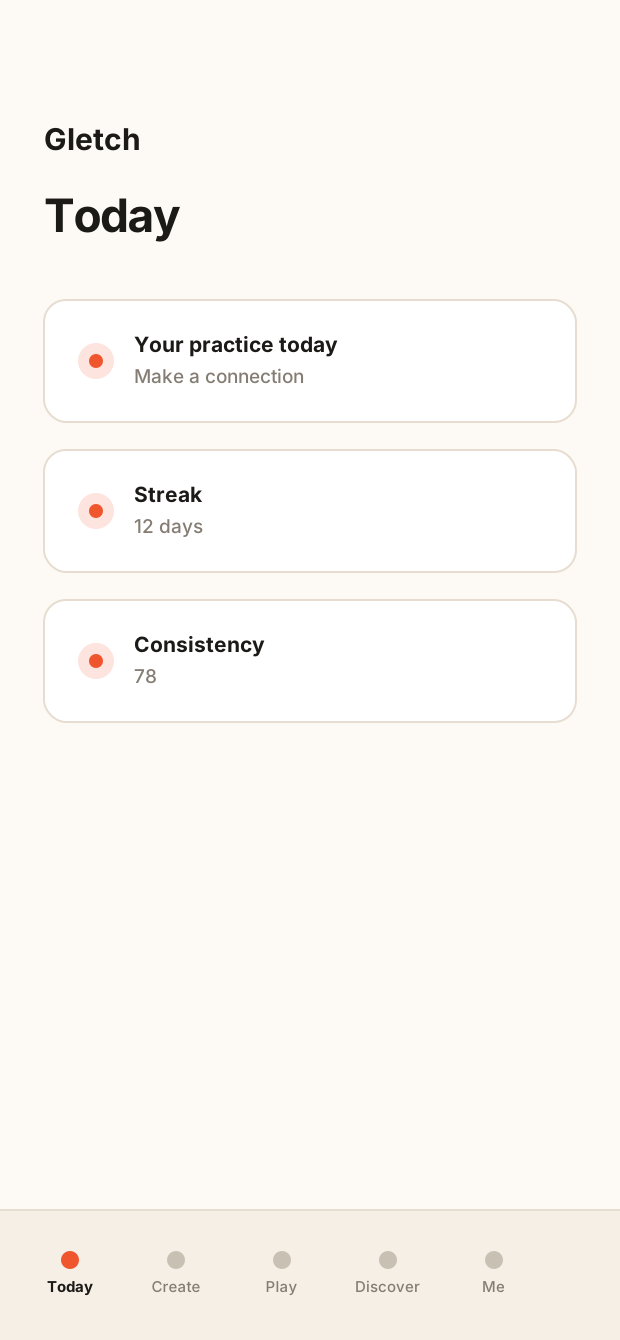
Make work that doesn't look like everyone else's.
Gletch is in private beta on iPhone. Leave your email and we'll send an invite as soon as a spot opens up.
Questions designers ask
No. Gletch is deliberately upstream of your tools. It trains the thinking that happens before you open Figma, then gets out of the way.
Daily UI challenges train execution — making another sign-up screen. Gletch trains idea generation itself: fluency, originality, and reframing, which transfer to every brief you take.
Gletch for other kinds of work
Writers
Beat the blank page and break plot problems.
Students
Find original angles and better questions.
Founders
Sharper strategy and non-obvious positioning.
Musicians
Escape default patterns and finish more tracks.
Artists
Develop a voice that's genuinely your own.
Teachers
Fresh lesson ideas and a model for teaching creativity.